• Home
  • About
  • Garden Design Portfolio
  • Planting Plan Portfolio
  • Services
  • Garden Journal
  • Contact
  • RHS Hampton Court Palace Garden Festival 2025
  • Publications
  • Custom Garden Design Gifts

Biodiverse gardens

  • Home
  • About
  • Garden Design Portfolio
  • Planting Plan Portfolio
  • Services
  • Garden Journal
  • Contact
  • RHS Hampton Court Palace Garden Festival 2025
  • Publications
  • Custom Garden Design Gifts

Viewing: Garden Observations - View all posts

One Garden, Two Communities: Celebrating 30 Years of Friendship 


On 10 October 2026, we celebrated 30 years of friendship between Half Moon Bay and its sister city, Kariwa Village, Japan, with the official opening of the garden I designed at Half Moon Bay Library.

When approaching the design, I wanted to think deeply about friendship and symbolism—how every plant and stone could tell the story of two places separated by an ocean, yet deeply connected.

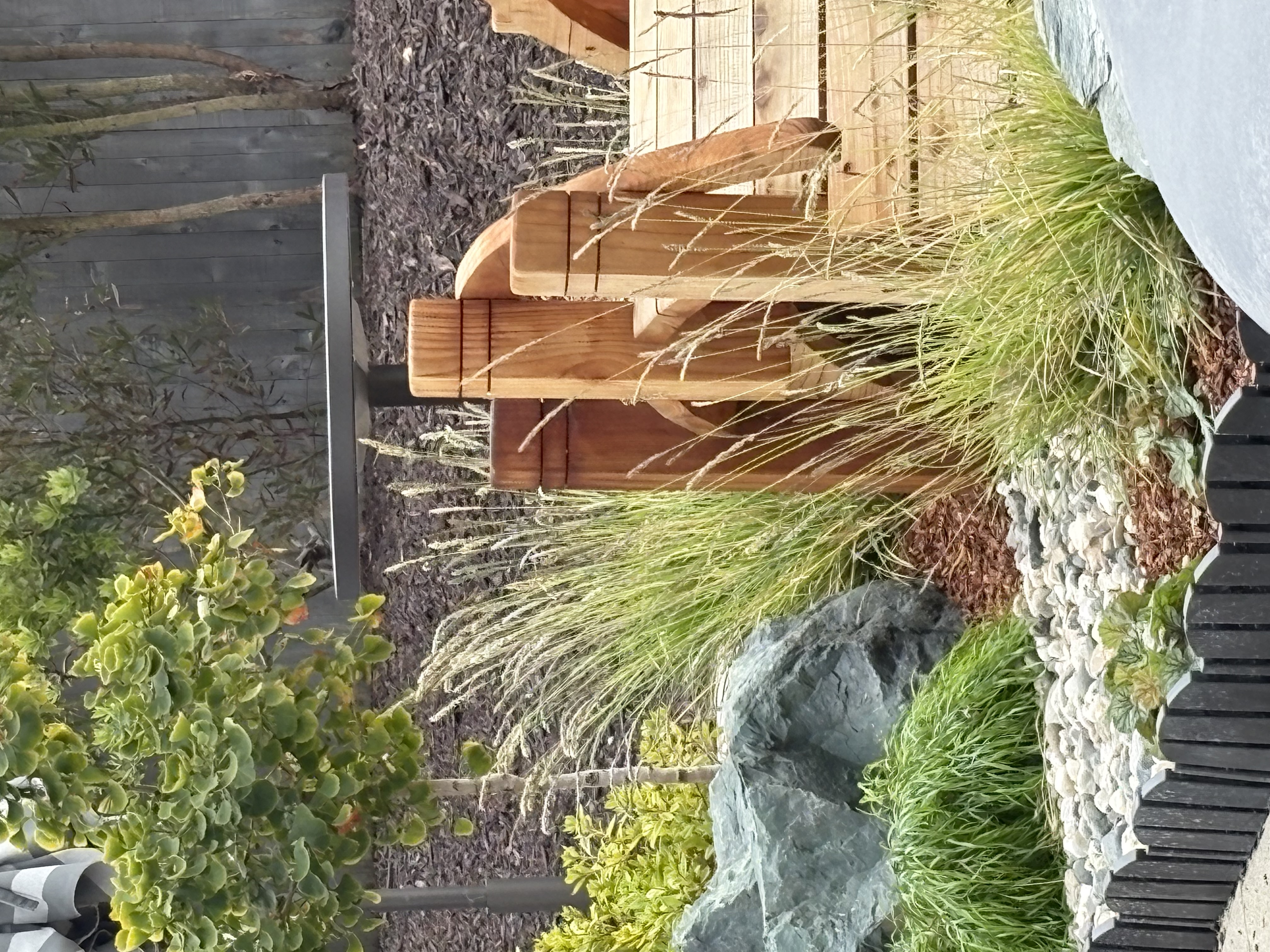
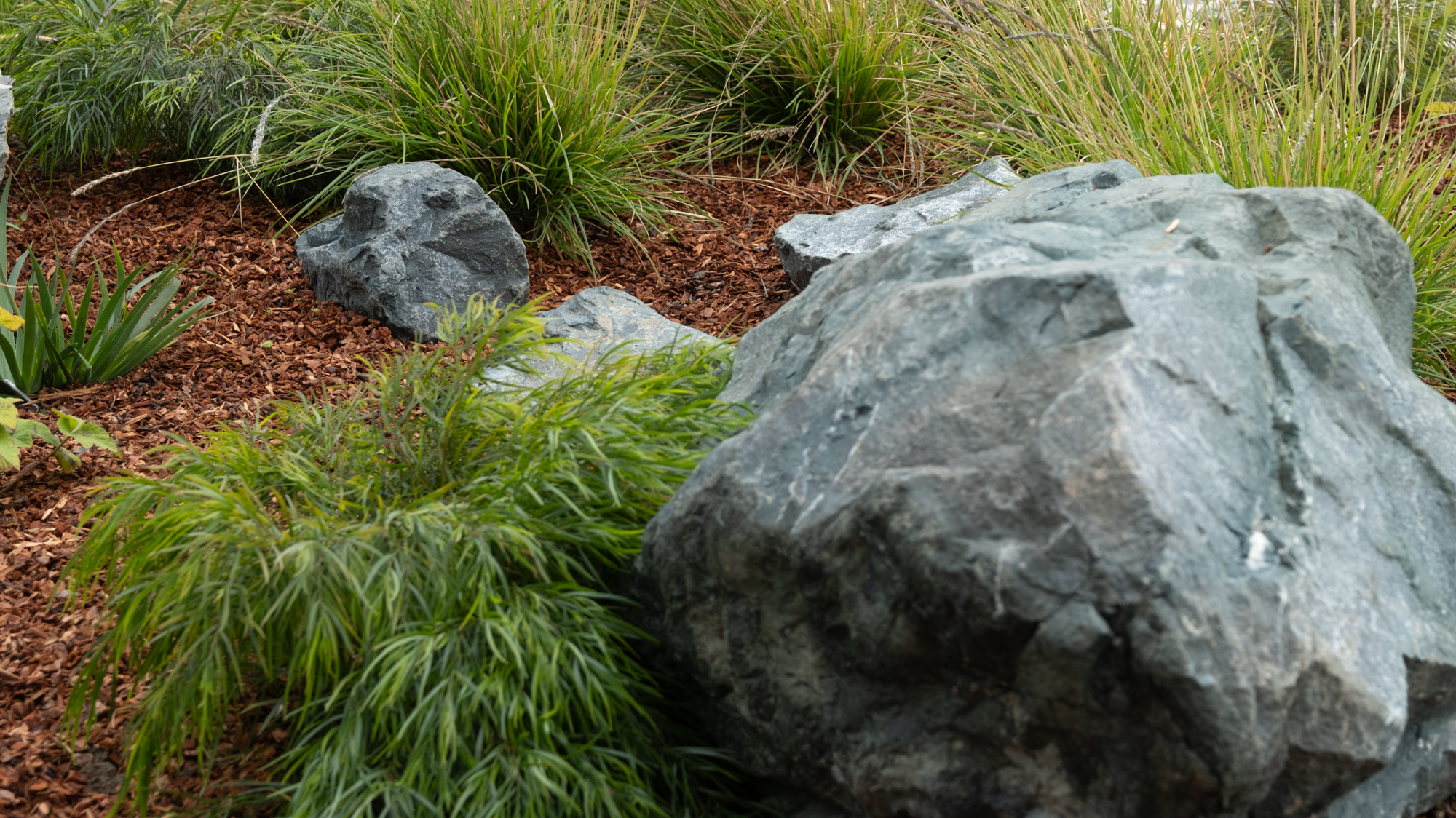
The design begins with the Pacific: a flowing ribbon of pebbles representing the ocean, with boulders recalling the mountains of Japan and cascading Acacia cognata suggesting a waterfall spilling over the rocks. Plants cross over and mingle, gradually blurring the distinction between the two sides.
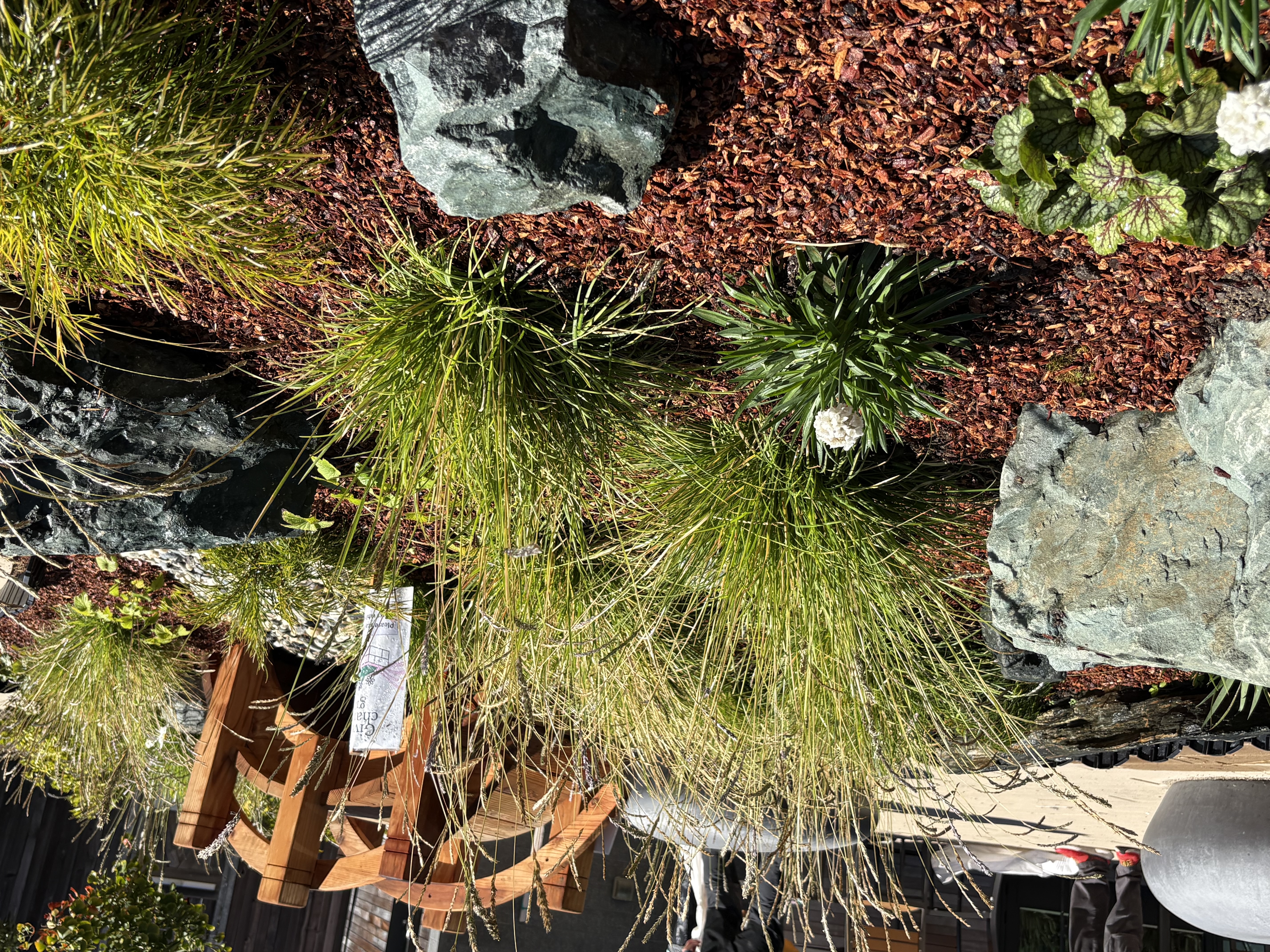


The symbolism of colour is woven throughout the planting. Green represents the enduring friendship between Half Moon Bay and Kariwa, held through the seasons in evergreen Sesleria and acacia. The blue of our California native Iris douglasiana reflects the shared sky and Pacific Ocean between us.

White, through Azaleas, Armeria and Anemone, represents purity and the respect each community has for the other’s culture. Red brings joy and celebration—quite literally running through the veins of Heuchera ‘Green Spice’, expressing the joy of this enduring friendship.
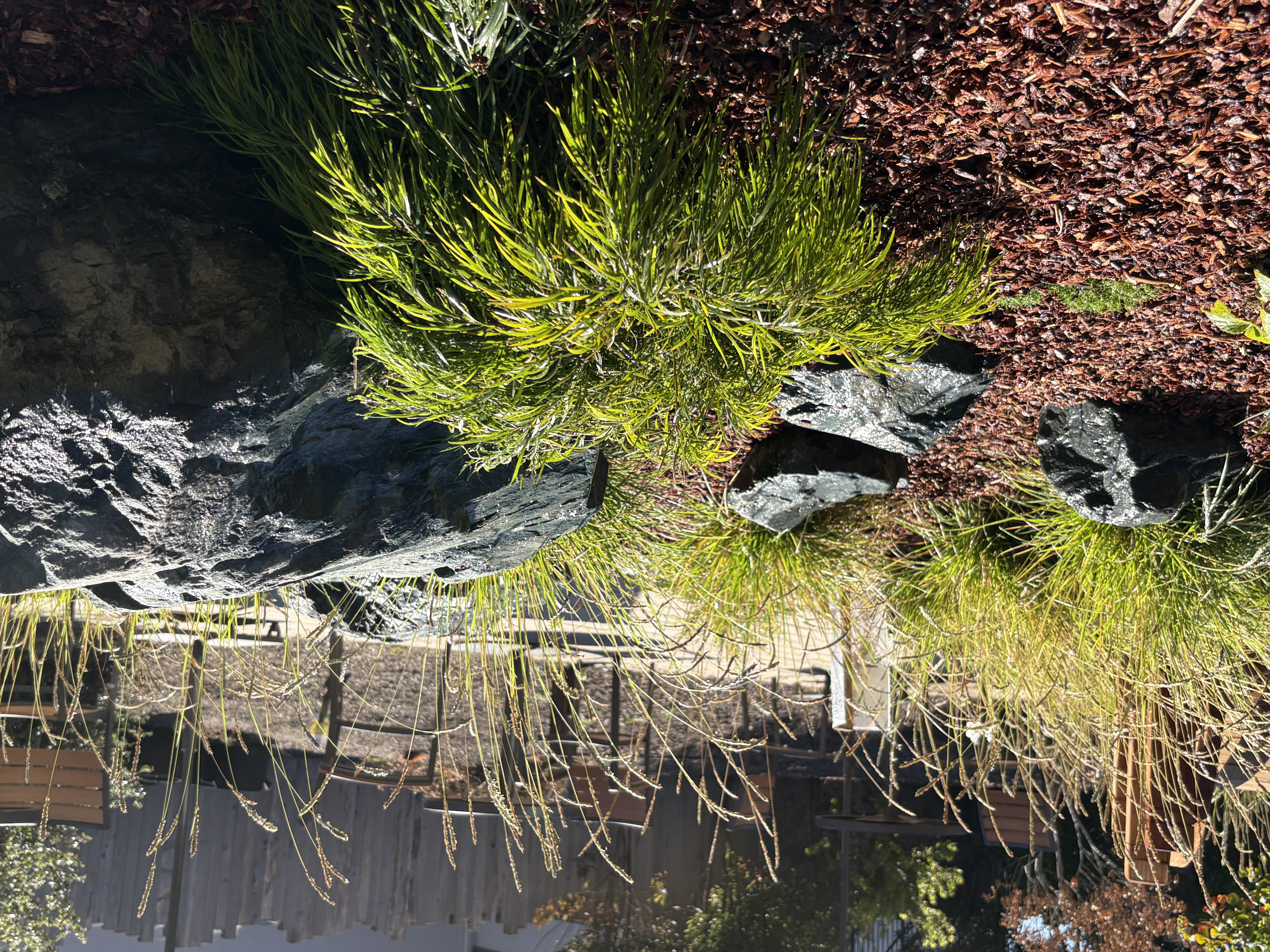


There are quieter stories in the planting too. The seed heads of Sesleria catch the coastal breeze like waves moving through Kariwa’s rice fields, a nod to the rice for which the village is known.

And finally, gold—abundance and renewal—belongs to the Ginkgo, the heart of the garden. Its distinctive leaf divides into two lobes that join into a single stem: two different places, each with its own landscape and culture, connected through one enduring friendship.


The bridge gives that connection a physical form, bringing the two sides together within this small shared space.
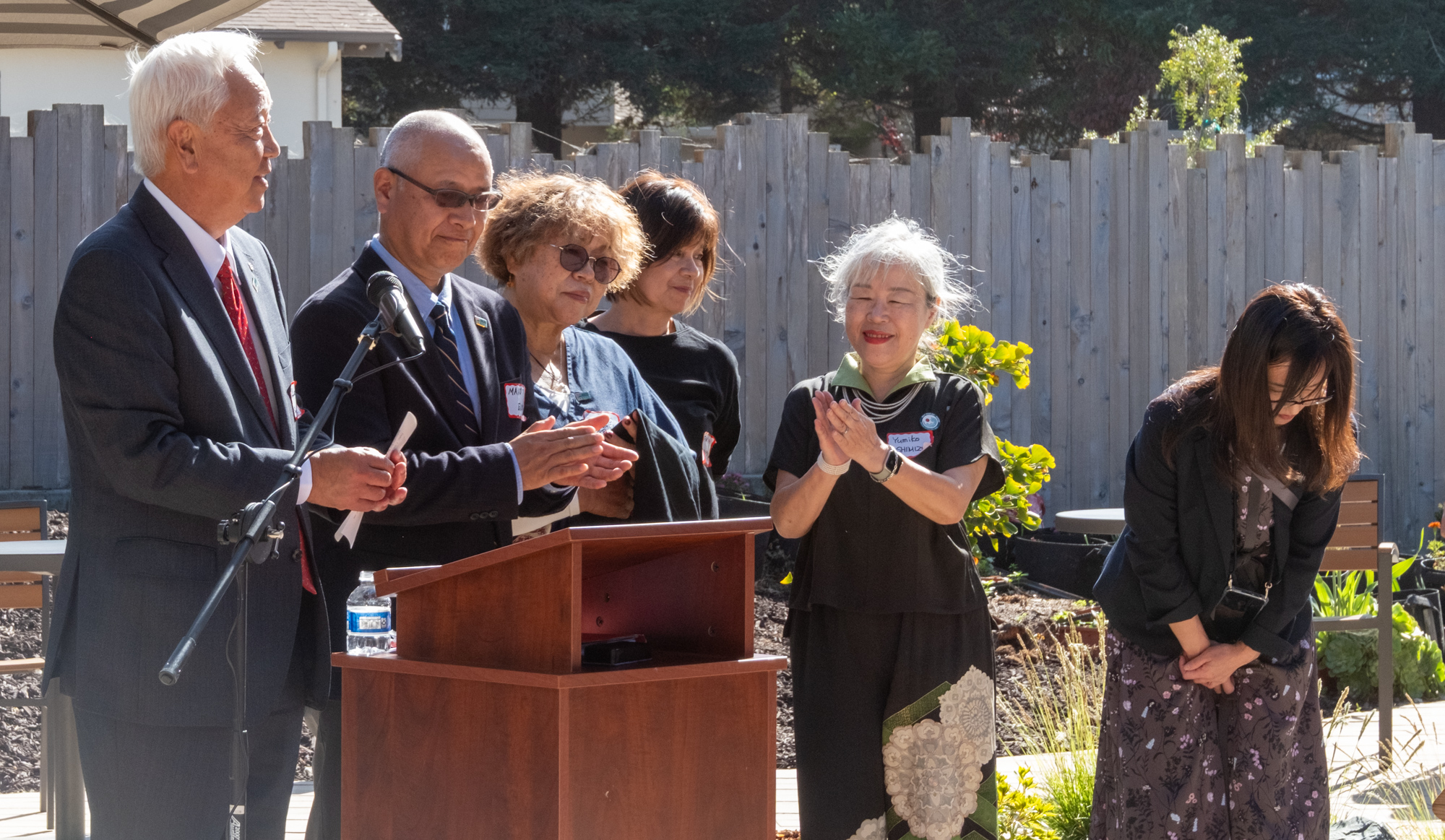


Seeing people from both sides of the Pacific gather around the garden and watching that story come to life was an absolute highlight. It was an honour to celebrate alongside the Mayors of Half Moon Bay and Kariwa Village, Japan’s Vice Consul, and representatives from the offices of Senator Josh Becker and Supervisor Ray Mueller.
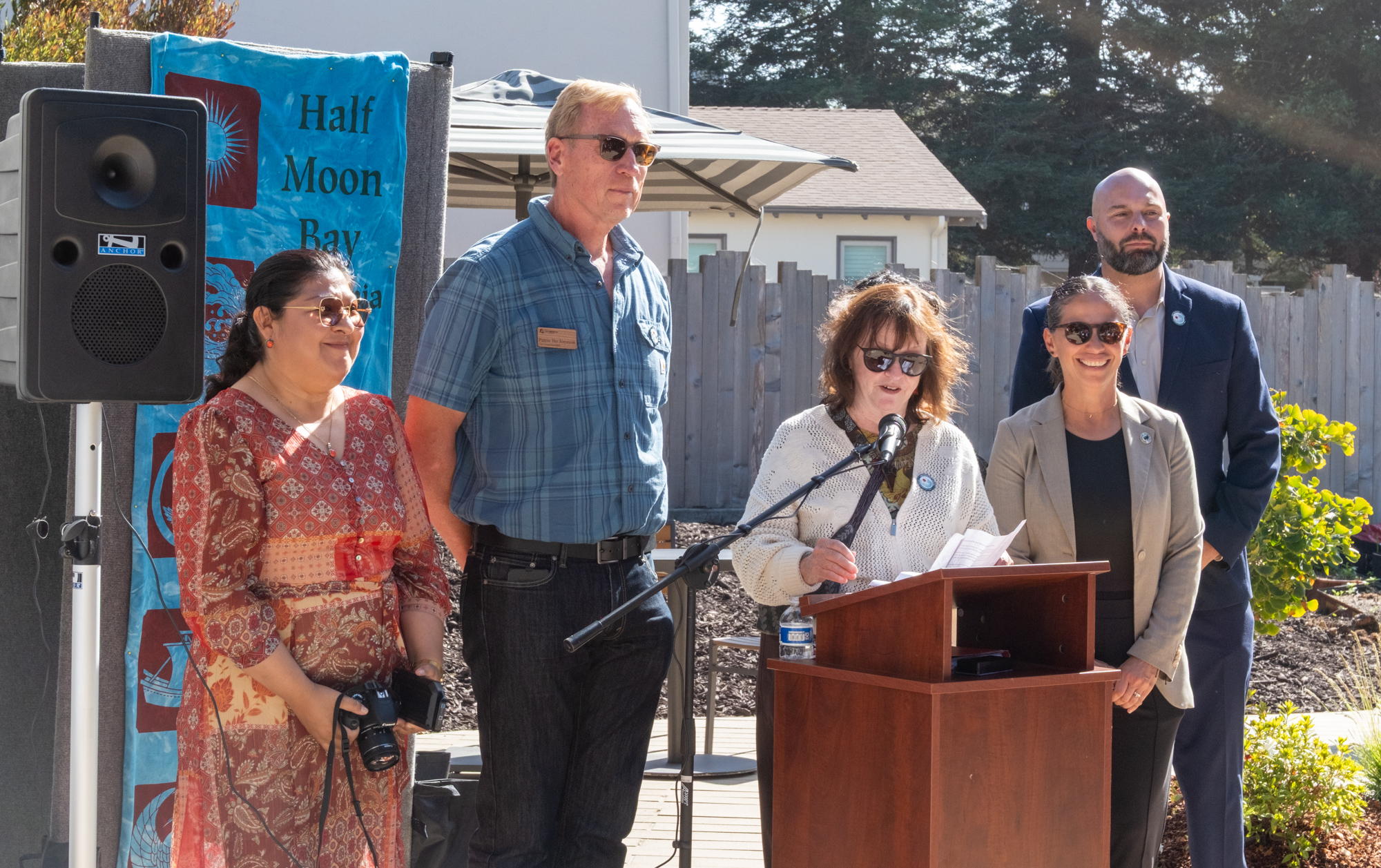
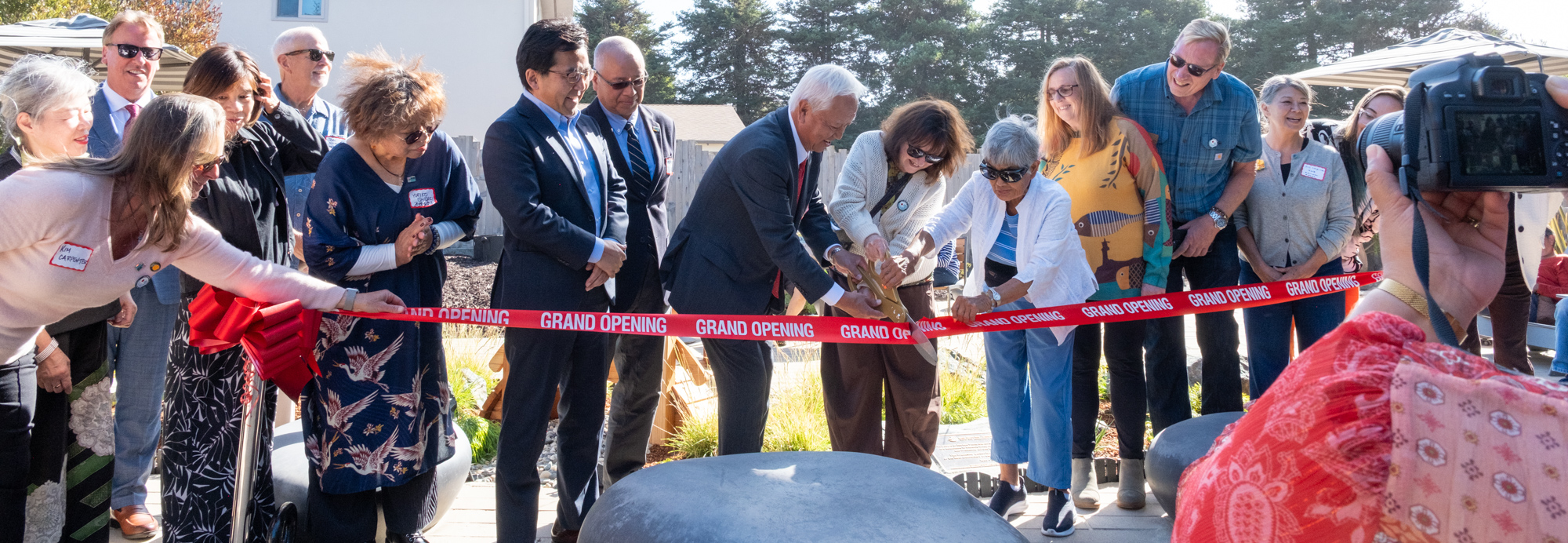


My hope is that the garden will offer a place to pause, notice the changing seasons and reflect on a friendship that continues to grow.

10/11/2026

  • Leave a comment
  • Share
    One Garden, Two Communities: Celebrating 30 Years of Friendship

    Share link

in Garden Observations, Ornamental Grasses, Community Garden

When Bedrock Becomes Part of the Design 


On one of San Francisco’s steep hillsides, an established garden presented an interesting planting challenge: a pronounced slope, shallow soil and beautiful shelves of exposed bedrock stepping naturally through the site.

The rock was one of the things that gave the garden its character. It wasn’t something I wanted to hide or design over. The challenge was to introduce new planting while keeping that sense that the garden belonged to the hillside.


The plan — and the ground

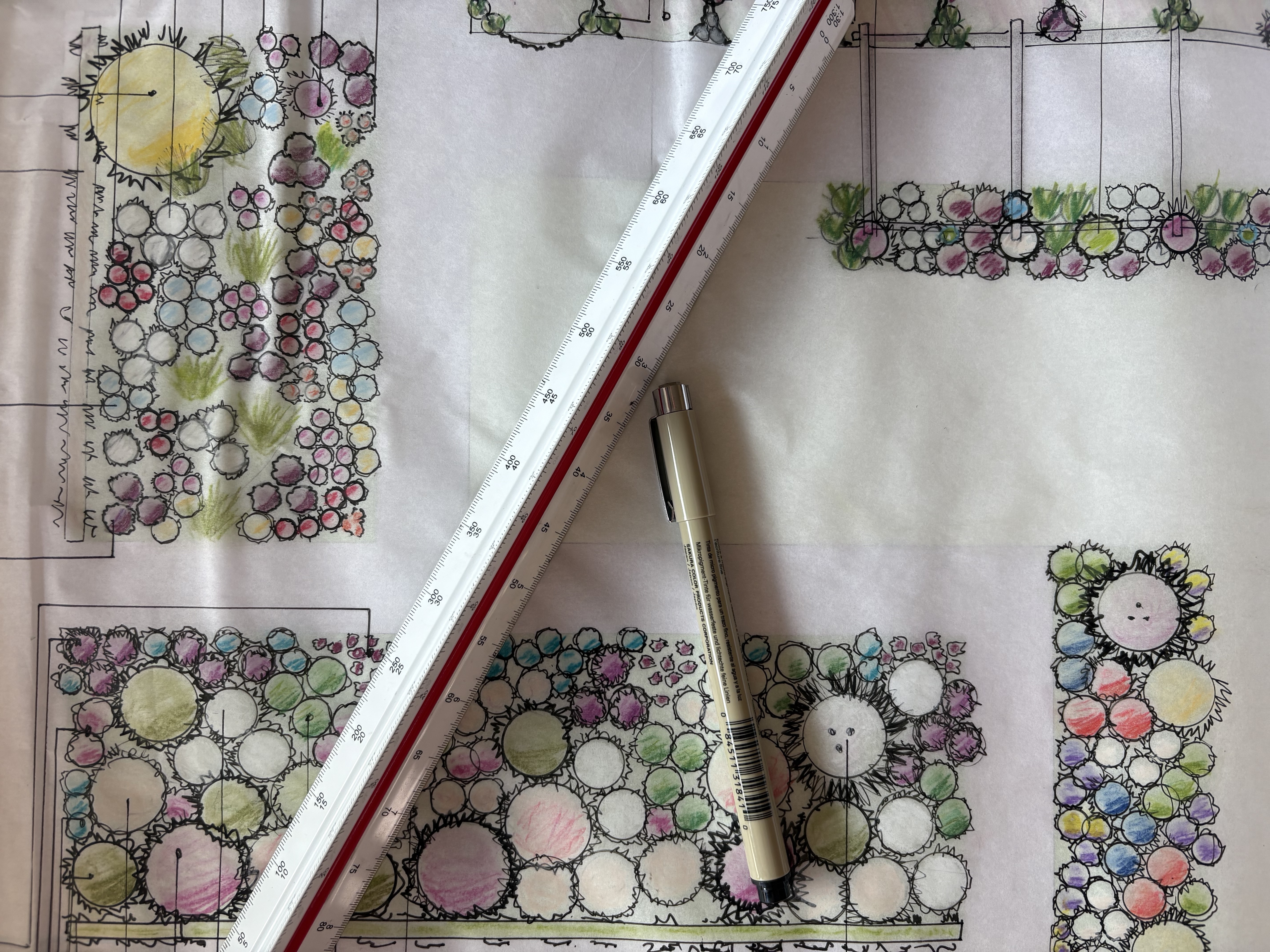
A planting plan gives you structure: the relationships between plants, repetition, rhythm and how the planting will move through a space.

But on a site like this, it can only take you so far.

Once we began setting out the plants, the hillside started making some of the decisions for us. A plant positioned perfectly on the drawing might land where there were only a few inches of soil over rock. Move it slightly, and suddenly there was a pocket deep enough to plant.

Groups shifted. Spacing changed. Some plants travelled rather further from their carefully considered position on the plan than expected.

And that was fine.

Working with what was already there

There was already a wonderfully established quality to this garden, with mature trees, existing groundcover and planting weaving around the exposed rock.

Rather than clear everything and begin again, we kept what was working and introduced the new plants amongst it.

The shelves and steps of bedrock began to influence the planting itself — creating natural changes in level, pockets for plants and pauses between groups. What might have been considered a constraint became one of the strongest features of the garden.

It’s also a reminder of why I like to be on site when a planting plan is installed.

The drawing provides the intention.

But sometimes, the ground gets the final vote.

08/28/2026

  • Leave a comment
  • Share
    When Bedrock Becomes Part of the Design

    Share link

in Garden Observations

More Than Just Flowers 

"I just want to look out from the house and see flowers."

That was the brief.

It sounds wonderfully simple, but like many gardens, the answer was about much more than flowers.

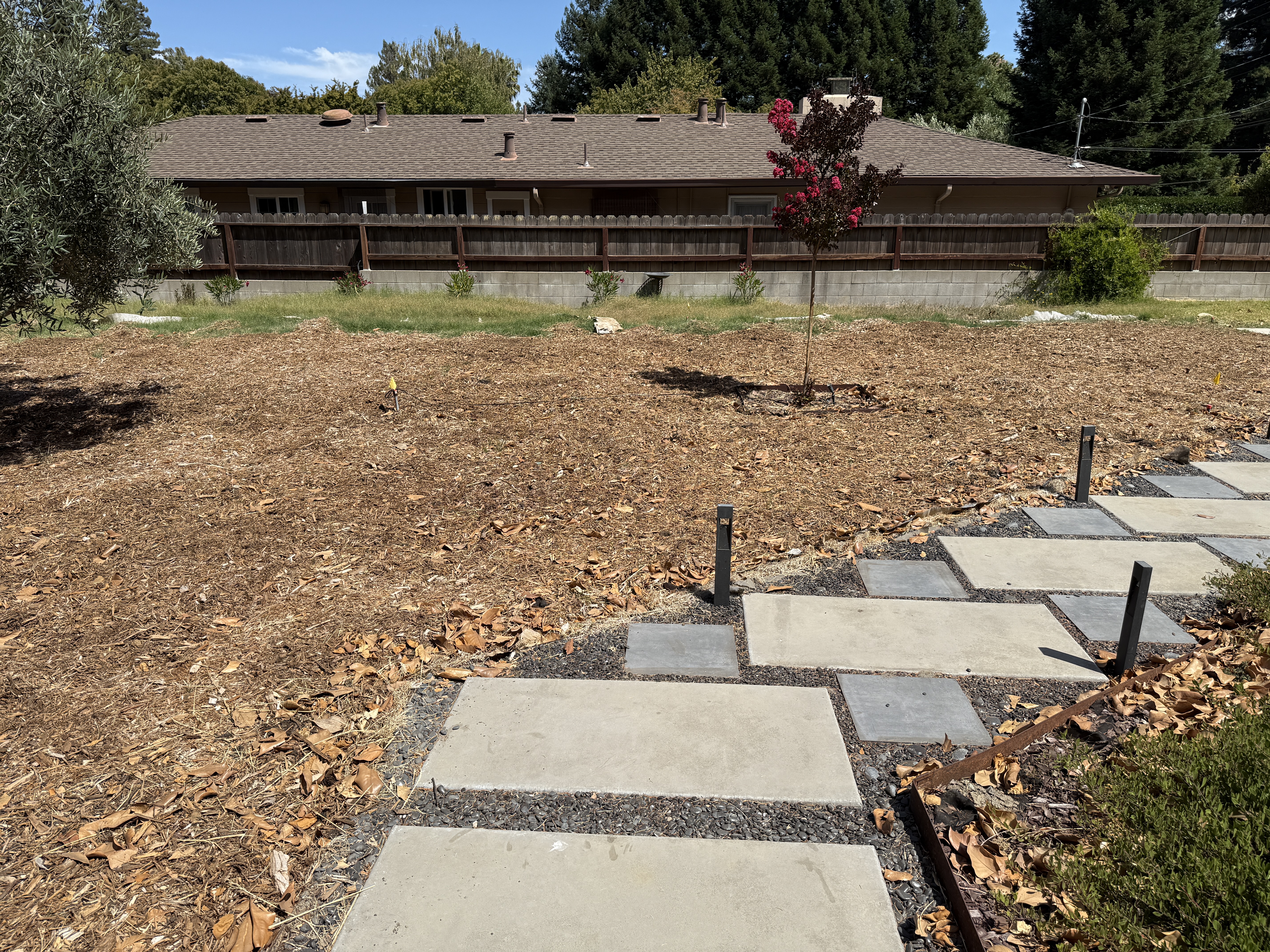
The garden covers approximately 3,000 square feet in Napa Valley, California. Although the planting area itself was well defined, it opened onto a much larger area beyond. One of my first suggestions, therefore, had nothing to do with planting at all.

Rather than allowing the eye to wander into the undeveloped space beyond, I recommended enclosing the designed garden with evergreen screening along the neighbouring boundary and across the rear. The intention wasn't to hide the landscape, but to create a garden room—a space that felt complete and intentionally framed.

I often think we spend so much time talking about flowers that we forget how important the edges of a garden are. They quietly define a space, frame the views and create a sense of enclosure. Without them, even beautiful planting can feel as though it simply drifts away.


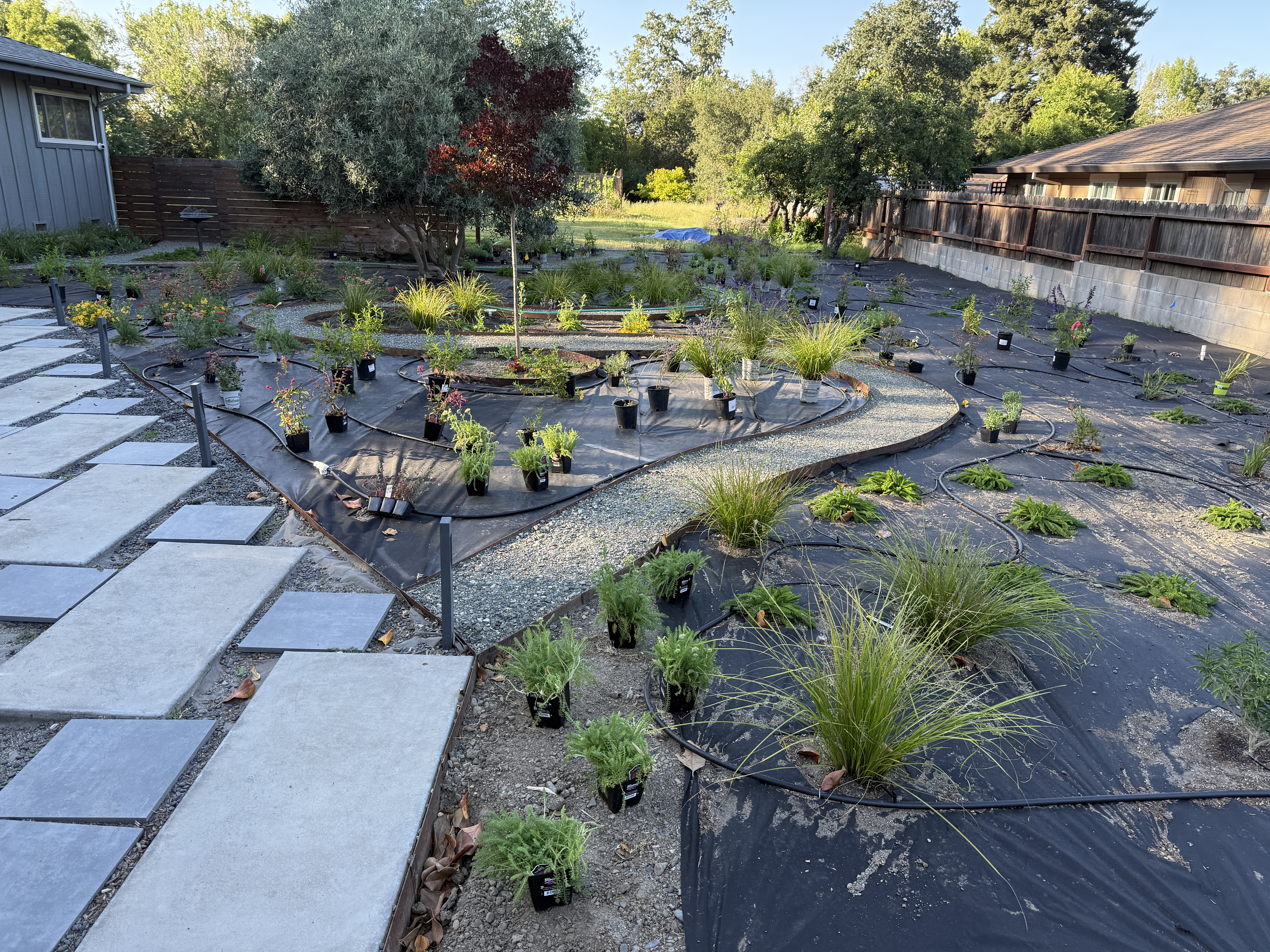
This project was also slightly unusual because it was designed entirely remotely. Using detailed measurements, photographs, aerial imagery and regular conversations, I developed the design without ever visiting the site. As the installation has progressed, the client has continued sending photographs, allowing me to watch the garden gradually come to life from miles away.


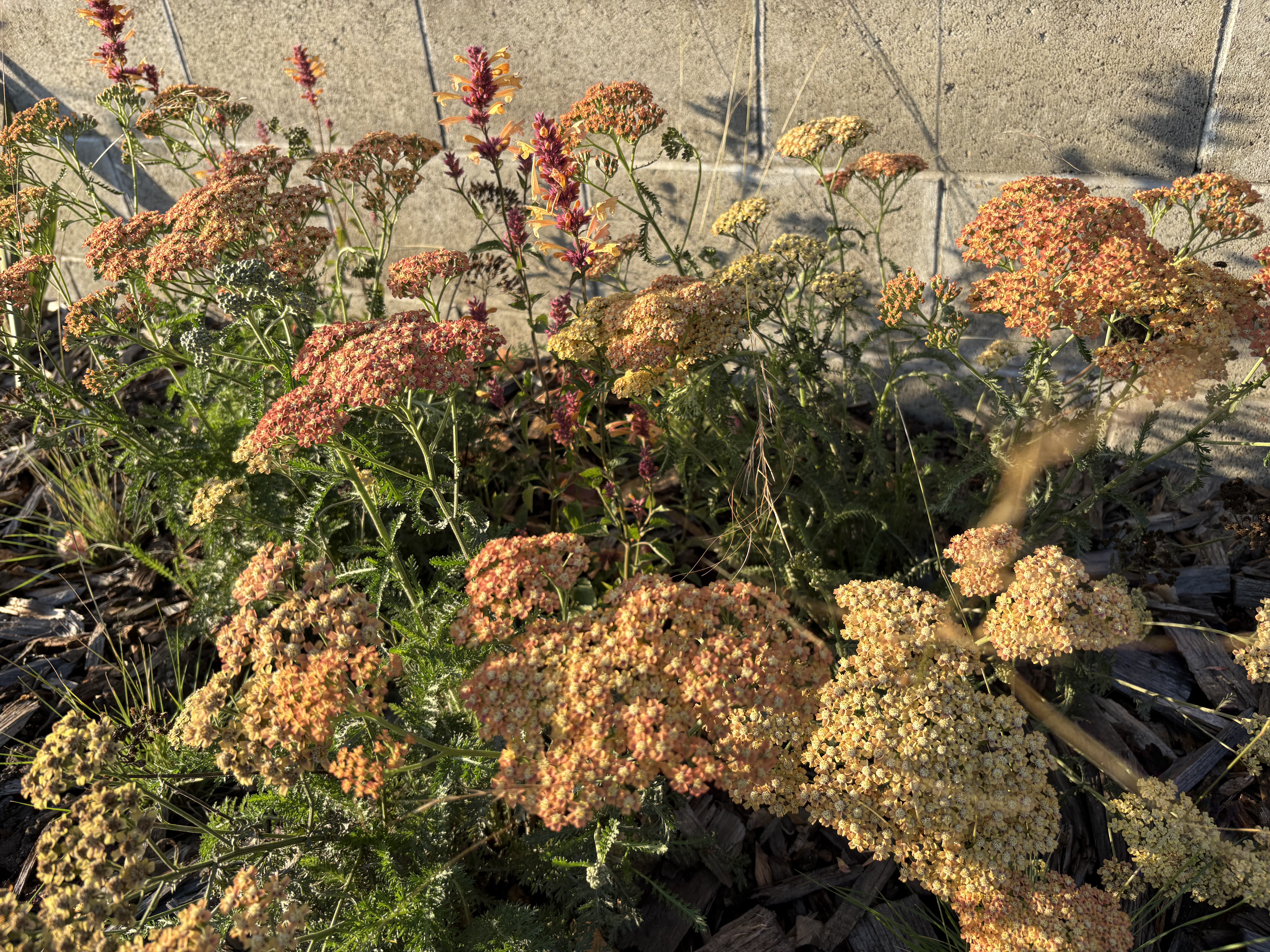
The planting itself reflects the client's wish for abundant colour and seasonal interest, but I always look beyond the brief to consider the character of a place. In Napa Valley that meant selecting plants suited to hot, dry summers while creating a resilient planting palette for the future. Drought-tolerant herbaceous perennials, evergreen grasses and carefully selected shrubs were chosen not only for their beauty but also for their ability to provide year-round structure, reduce irrigation requirements and reflect fire-conscious planting principles appropriate to the region.


Among the planting, Sesleria autumnalis plays a quiet but important role. I wanted a grass that would bring movement and texture throughout the year while also providing an evergreen framework for the surrounding perennials. In a region where hot, dry summers are a reality, that year-round structure made it a more appropriate choice for this project than many of the taller deciduous grasses.

One of the things I always consider is how a garden will be maintained long after the last plant has gone into the ground. Beautiful planting should also be practical. Discreet maintenance paths weave through the borders, allowing every part of the garden to be reached without trampling through established perennials. As the planting fills out, they'll almost disappear—but they'll quietly ensure the garden remains as enjoyable to maintain as it is to look at.


The installation is still underway, and that's perhaps one of the things I enjoy most about garden design. A garden doesn't reach its full potential on planting day. It grows into itself. The grasses soften, the perennials begin to intermingle, and each season reveals something new.


07/15/2026

  • Leave a comment
  • Share
    More Than Just Flowers

    Share link

in Garden Observations

On Tomatoes, Germination, and the Difficulty of Thinning 

A few weeks ago, while chatting on the phone, I absent-mindedly sowed tomato seeds.

Or rather, I sowed two entire packets of tomato seeds.

When the conversation ended and I looked down, I realised that what should have been a carefully measured sowing had become a rather enthusiastic one. Four containers, two varieties (Pomodoro and Roma), and considerably more seed than any sensible gardener would use at one time.

The seeds were started in one of my favourite propagation tools: the clear plastic containers that butter lettuce often comes in from the grocery store. I punch a few drainage holes in the bottom, fill them with compost, and sit them on a tray with a small amount of water so the compost can absorb moisture from below. Once the lid is closed, they create an excellent environment for germination. Over the years I've found them far too useful to throw away.

As it turns out, they are perhaps a little too effective.

Tomatoes are known for their enthusiasm. Given warmth, moisture, and fresh seed, germination rates can be remarkably high. This is usually excellent news. It becomes slightly less excellent when nearly every seed appears determined to participate.

Within a short time, hundreds of seedlings emerged. Healthy, vigorous, and seemingly intent on proving that every single seed deserved a chance.  Note, this is pot 1 of 4!

As gardeners, we are taught that thinning is essential. Seedlings sown too densely compete for light, water, nutrients, and space. Left untouched, they often become weaker than they would have if a few had been selected and given room to thrive.

It is entirely sensible advice.

And yet, I found myself hesitating. Each seedling had successfully germinated. Each had overcome the odds. Removing them felt strangely unfair.

The practical solution, of course, was distribution. Tomatoes have since found homes in containers, vegetable beds (between the raspberries), and spare corners throughout my garden. Friends, family, and neighbours have all become recipients of what has become an accidental tomato surplus.

The original containers, however, remain densely populated.

The experience reminded me that gardening is often a balance between abundance and restraint. Nature produces more seedlings than can survive. Gardeners intervene, selecting, editing, and shaping. Knowing this does not necessarily make the decisions easier.

For now, I continue to admire the determination of those tiny seedlings. The thinning may happen eventually.

Or perhaps the Bay Area will simply have a few more tomato plants this year than it otherwise would have.

Topics: Tomatoes, Seed Starting, Garden Observations, Sustainability, Recycle, Reuse

06/16/2026

  • Leave a comment
  • Share
    On Tomatoes, Germination, and the Difficulty of Thinning

    Share link

in Garden Observations

Graduate of London College of Garden Design Logo
Certified California Native Plant Landscaper
RHS Hampton Court Palace Flower Show Designer 2025
Graduate of London College of Garden Design  Planting Design Diploma

Some images ©

  • Log out
Powered by Bandzoogle