• Home
  • About
  • Garden Design Portfolio
  • Planting Plan Portfolio
  • Services
  • Garden Journal
  • Contact
  • RHS Hampton Court Palace Garden Festival 2025
  • Publications

Biodiverse gardens

  • Home
  • About
  • Garden Design Portfolio
  • Planting Plan Portfolio
  • Services
  • Garden Journal
  • Contact
  • RHS Hampton Court Palace Garden Festival 2025
  • Publications

On Tomatoes, Germination, and the Difficulty of Thinning 

A few weeks ago, while chatting on the phone, I absent-mindedly sowed tomato seeds.

Or rather, I sowed two entire packets of tomato seeds.

When the conversation ended and I looked down, I realised that what should have been a carefully measured sowing had become a rather enthusiastic one. Four containers, two varieties (Pomodoro and Roma), and considerably more seed than any sensible gardener would use at one time.

The seeds were started in one of my favourite propagation tools: the clear plastic containers that butter lettuce often comes in from the grocery store. I punch a few drainage holes in the bottom, fill them with compost, and sit them on a tray with a small amount of water so the compost can absorb moisture from below. Once the lid is closed, they create an excellent environment for germination. Over the years I've found them far too useful to throw away.

As it turns out, they are perhaps a little too effective.

Tomatoes are known for their enthusiasm. Given warmth, moisture, and fresh seed, germination rates can be remarkably high. This is usually excellent news. It becomes slightly less excellent when nearly every seed appears determined to participate.

Within a short time, hundreds of seedlings emerged. Healthy, vigorous, and seemingly intent on proving that every single seed deserved a chance.  Note, this is pot 1 of 4!

As gardeners, we are taught that thinning is essential. Seedlings sown too densely compete for light, water, nutrients, and space. Left untouched, they often become weaker than they would have if a few had been selected and given room to thrive.

It is entirely sensible advice.

And yet, I found myself hesitating. Each seedling had successfully germinated. Each had overcome the odds. Removing them felt strangely unfair.

The practical solution, of course, was distribution. Tomatoes have since found homes in containers, vegetable beds (between the raspberries), and spare corners throughout my garden. Friends, family, and neighbours have all become recipients of what has become an accidental tomato surplus.

The original containers, however, remain densely populated.

The experience reminded me that gardening is often a balance between abundance and restraint. Nature produces more seedlings than can survive. Gardeners intervene, selecting, editing, and shaping. Knowing this does not necessarily make the decisions easier.

For now, I continue to admire the determination of those tiny seedlings. The thinning may happen eventually.

Or perhaps the Bay Area will simply have a few more tomato plants this year than it otherwise would have.

Topics: Tomatoes, Seed Starting, Garden Observations, Sustainability, Recycle, Reuse
06/16/2026

  • Leave a comment
  • Share
    On Tomatoes, Germination, and the Difficulty of Thinning

    Share link

in Garden Observations

W9 Friday and Bookkeeping: So Much for Designing! 

When people think of landscape design, they usually imagine plant palettes, SketchUp models, and garden boots. But behind the scenes, there’s another layer: Security.

I spent my morning navigating the "delightful" world of encrypted PDFs and password-protected forms. While it’s tempting to just hit "send" on an email, your personal information (and mine!) deserves a digital deadbolt. I apply this same level of detail to my construction sets—because doing it the right way is the only way.

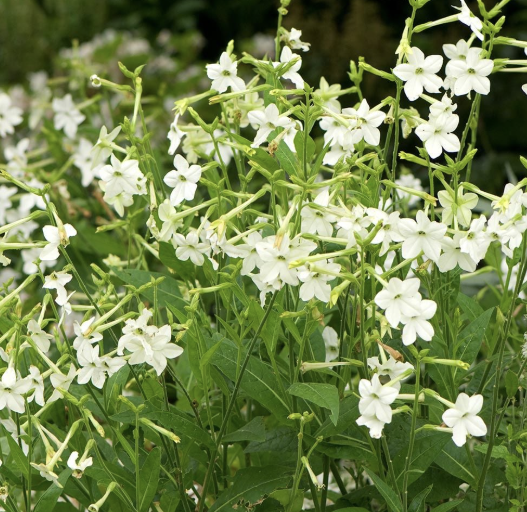
The Reward: Switching tabs from Adobe to the much more inspiring textures of Nicotiana alata 'Moonlight'. I'm currently obsessed with its lime-green trumpets and moth-attracting evening scent. Now, I’m off to the garden to actually enjoy that fragrance in person. Happy Friday!


Nicotiana alata: The perfect 'Moonlight' palate cleanser after a day of paperwork.

02/13/2026

  • Leave a comment
  • Share
    W9 Friday and Bookkeeping: So Much for Designing!

    Share link

Defensible Beauty: The Art of Firewise Landscaping 

Wildfire is now an unavoidable part of California life. Even gardens that have thrived for decades can be vulnerable to flames and embers. Adaptive gardening starts with understanding a site’s conditions—sun, soil, slope, and climate. In California, it also means considering wildfire risk, so landscapes are designed to be both beautiful and safer for homes, gardens, and neighborhoods.


Expert Analysis: The Art of Strategic Spacing > This entry demonstrates the

The Philosophy of Firewise Design

Adaptive gardening is about responding to the unique conditions of each site and designing landscapes that can thrive despite extreme weather. Firewise design is a key dimension of this approach, relevant not only at the wildland edge but also in our towns and cities. Thoughtful choices protect the safety of our homes while maintaining the character and richness of the garden.

Expertise in Practice: Managing Fire Movement

There’s a common misconception that firewise gardens must be sparse or gravel-heavy. In reality, we use professional design to manage how fire moves across a landscape. While no plant is truly fireproof, we focus on:

Evergreen Grasses & Sedges: Rather than using ornamental grasses that go dormant and dry out into "flashy fuel," we prioritize evergreen species like  Berkeley Sedge (Carex tumulicola). These stay hydrated and green year-round, offering a lush look with much lower risk.

Strategic Spacing: We use shrubs and trees to create immersive, naturalistic landscapes, but we space them to break up "fuel ladders" and prevent fire from climbing into the canopy.

Material Selection: Integrating stone paths, patios, and low-combustibility mulch allows gardens to remain vibrant while creating vital breaks in vegetation.

Community Context: When neighbors consider placement and materials collectively, the risk of a small ignition spreading through a neighborhood is significantly reduced.

Designing for Peace of Mind

Living in harmony with our environment means respecting its power. Transitioning to a Firewise garden offers more than just aesthetic value—it offers peace of mind. Here are a few resilient, high-moisture options that fit beautifully into a Firewise palette:

Toyon (Heteromeles arbutifolia): A California classic with leathery, fire-resistant leaves.

Island Alumroot (Heuchera maxima): A lush, low-growing option for shaded areas with high moisture retention.

Coffeeberry (Frangula californica): An evergreen shrub that is remarkably fire-resistant when properly maintained.

If you’d like to discuss a Firewise assessment or want to explore fire-resistant plant palettes that thrive in our climate, I’d love to share some possibilities with you.

01/19/2026

  • Leave a comment
  • Share
    Defensible Beauty: The Art of Firewise Landscaping

    Share link

in Firewise Design, Resilience and Climate

Adaptive Design: The Art & Ethics of the Naturalistic Garden 

Adaptive gardening blends ethical stewardship with the artistry of naturalistic design to create climate-resilient, biodiverse landscapes. In this post, SW Garden Design shares expert strategies for creating resilient, thriving gardens that work in harmony with the changing California ecology.

Gardens are living, breathing tapestries—and like all living things, they must adapt to the world around them. In my practice, I create adaptive gardens that respond to extreme weather, shifting climates, and the unique conditions of each site. This approach allows me to weave together beauty and resilience, creating immersive environments that offer year-round interest and ecological value.

The Naturalistic Philosophy Naturalistic gardens are not defined by rigid geometric boundaries. Instead, they focus on interwoven textures, soft-layered perennials, and long-term health. Plants are chosen to withstand extreme weather and support local pollinators, creating a thriving, balanced ecosystem tailored to the people who wander through it.

Ethical and Sustainable Choices Every design decision considers sustainability and ecological impact. From soil health and water management to biodiversity, the goal is to create gardens that are beautiful, functional, and responsible. I prioritize sustainable materials—using recycled, reclaimed, or low-impact options for paths and structures wherever possible. Even small choices, like selecting drought-tolerant species or designing efficient irrigation, contribute to a garden that works in harmony with nature over time.

Examples
Here are a few ways adaptive design comes to life in my work:

Project A: A backyard garden using mixed perennials and climate-resilient shrubs to reduce water use while maintaining seasonal color, paired with reclaimed timber seating and permeable paving.

Project B: A drought resistant space that thrives despite variable rainfall, it attracts bees, butterflies, and birds, and incorporates sustainably sourced garden materials for pathways and edging.


Adaptive gardens combine beauty, resilience, sustainable materials, and thoughtful planning. If you’re curious about creating a garden that thrives in a changing climate, I’d love to discuss ideas and possibilities with you.  


01/05/2026

  • Leave a comment
  • Share
    Adaptive Design: The Art & Ethics of the Naturalistic Garden

    Share link

Graduate of London College of Garden Design Logo
Certified California Native Plant Landscaper
RHS Hampton Court Palace Flower Show Designer 2025
Graduate of London College of Garden Design  Planting Design Diploma

Some images ©

  • Log out
Powered by Bandzoogle